TrainsHistoryObservationsHumorAdvertisementsEventsMuseumsPhotosVideosTuesday ToursPost ArchivesHistorical ArtifactsPanorama ProjectRSS FeedFollow us on twitterSubscribe by email Home

Posts Tagged ‘History’

Counting down the 12 most popular posts of 2011, Part 2 Train

Thursday, January 5th, 2012

Here is the final part of our top posts of 2011. Thank you to all of you for your continued support and visits. These are the posts that you all voted for, with your eyes and your clicks.

No tour of any of Metro-North’s lines could be complete without a visit to the most wonderful station of all – Grand Central. Our Harlem Line Tuesday Tour finished with photos of GCT, and was extremely well-liked, coming in at number seven in the countdown. I think I was rather proud of the photo set, as it covered quite a few locations that were not part of the main concourse. Although the concourse is the highlight, it is by all means not the only thing interesting found in the Terminal.

These are the reasons why there are probably people that work for the MTA that dislike me… although I love the history of the rails, as well as photography, there are some times that I just can’t help joking around. In this spoof, The MTA wants to make sure you are prepared, I poked a little bit of fun at the brochure that they released regarding hurricanes. My intent wasn’t to knock their preparations (as that hurricane brochure came in handy later on during the year!!), it was more to make an amusing statement about the snowstorms slamming us that just wouldn’t stop. We were somewhat prepared – but absolutely fed up with the snow that kept piling up. But being able to add in some zombies and Norse mythology just made it all the more fun.

Many times I’ve passed through the streets in Danbury and sighted a particular wall covered with some absolutely gorgeous graffiti. Every time I did, I always thought that I should go and take a photo of it… but I never got a chance to do it until March. In the post Gorgeous rail-side graffiti in Danbury I posted photos of the mural (which was a lot larger than I had originally suspected). The painted wall is located just off of Main Street in Danbury, not far from the Metro-North station, and located along some railroad tracks.

Just about any day this year was a good time to be anyone other than Hermon Kaur Raju. Raju is the commuter we love to hate, yapping on her cell phone the whole ride and using a whole slew of four letter words. When a train conductor told her to shut her trap, Raju went on the offensive – demanding that everyone acknowledge how educated she was. Most unfortunately for her, someone had been recording the entire exchange, and posted it to YouTube. Despite being removed a short time later by the original poster, the damage had been done. The clip made it to the Huffington Post, Gawker, and Raju was even one of Keith Olbermann’s “Worst Persons In The World.”

Although I did not post her name at the time, resisting the urge to poke fun at Raju was impossible. The post Be nice to your conductor, or you’ll wind up on the internet was one of our top posts for the year. Metro-North never really made a public response regarding the incident, however Raju would likely be pleased to know that the conductor involved was reprimanded for the incident – for not wearing her hat.

Discovering the old stations of the Harlem Division has been an interest of mine ever since I first read about them. Many no longer exist, but a few have been converted to businesses and are still around. Only one (to my knowledge) has been converted into use as a home, and the thought of living in an old train station is probably pretty awesome to anyone that calls themself a railfan. In an Adventure to Sharon Station, I got a great chance to tour the house, which is currently for sale. Even though the the outside looks much as it did way back when, the inside contains all the modern comforts one would expect in a home. I’m very appreciative to Elyse Harney Real Estate for allowing me to see the house, even though they knew I didn’t have the means to purchase it – though if I ever win big in the lottery, they may be one of the first people I call.

Although often forgotten by commuters, Metro-North does have tracks on the west side of the Hudson. I suppose they lines over there are easily overlooked, as they don’t go into Grand Central, and are operated by New Jersey Transit. However, one of the most beautiful locations along Metro-North’s tracks is found on the west side. The Picturesque Moodna Viaduct, located in the rural countryside of Orange County. The viaduct is the longest and tallest trestle east of the Mississippi River, and I was very happy to note that the Hurricane Irene damage on the Port Jervis line did not greatly harm this wonderful gem. It seems that many others also find the viaduct a lovely place, as it was our second most popular post on the blog in 2011.

In an absolutely unprecedented move, the entirety of MTA buses and trains shut down ahead of the oncoming storm, Hurricane Irene. Although some people criticized the decision as a bit over the top, it turned out to be the right one. Of all the agencies, Metro-North likely suffered the worst damages, from both high winds and rain-induced floods. In an absolutely brilliant move, the MTA kept customers apprised of the ongoing situation through their Flickr account, visually documenting the storm on their infrastructure. Some of the photos even wound up in the trending topics of twitter – a monumental achievement for the MTA’s social media endeavors.

I reposted many of the MTA’s photos under the title of Metro-North and the Aftermath of Irene, Damage Photos, and it was the number one post of the year on I Ride the Harlem Line.

Tuesday Tour of the New Haven Line: Westport Train History Photos

Tuesday, November 29th, 2011


Postcard view of the station, labeled as Saugatuck. This card was postmarked 1915.

Today’s stop on our ongoing tour of the New Haven Line is Westport, a lovely station with a miniature identity crisis. Although Metro-North refers to this station simply as “Westport,” historically it has been called “Westport & Saugatuck.” The old station building that still remains – built around 1880 – also lists the name as “Westport Saugatuck” on the front. However, it seems that many of the locals refer to the station simply as “Saugatuck,” the name of the portion of Westport where the station resides. For consistency’s sake, I’ll use the Metro-North designation of “Westport” hereon.


Old train tickets listing the station name as Westport & Saugatuck

Much of Westport’s charm derives from the lovely station building, which was renovated in 2004. The station still contains the original ticket window, however Metro-North no longer staffs this window and tickets are sold through on-platform TVMs. Besides the obvious waiting-room and bathrooms the station contains, it also has a small book swap shelf, courtesy of the Westport Public Library (this is the second New Haven Line station I’ve featured with a book swap shelf. Redding was the first. I absolutely love the idea). During the aforementioned renovations an additional tunnel under the tracks was installed, with elevator, as to meet ADA guidelines. Though the main station is on the New York/westbound side of the tracks, another station building exists on the opposite side, which is used as a taxi stand and contains a car rental office. This building looks significantly more beat-up, and is covered in a layer of paint that has cracked over the many years.


1950′s photographs of Westport station


Photo of a 1912 train wreck that occurred near the station.

Westport is a lovely little station, surrounded by an interesting neighborhood, of which residents are extremely proud – despite the many changes over the years. Thanks to the railroad (which first arrived in 1848), getting to Westport station is relatively easy. The station is about 44 miles away from Grand Central, and travel time is about an hour and ten minutes.


Melrose Station, in the late 1800′s Train History

Friday, September 23rd, 2011

I’ve had the wonderful opportunity to talk to some really interesting railroad people recently, one of whom is Joe Schiavone, better known in the area as the “Old Put Guy.” He’s just completed his third book on the New York Central’s Putnam Division, but has been a railfan ever since he was very young. When I met him for the first time several weeks ago, he told me that as a young boy taking photographs, getting an invite into the engine happened somewhat frequently. I told him that Metro-North does the same thing for me – except the invite is from the police, and the ride is in a cop car and not a locomotive engine. For me, posting about Melrose is almost like returning to the “scene of the crime.” That is, if photography were a crime. Which it isn’t. Or at least, it shouldn’t be. I will admit that I have bit of a phobia of police, so every time I go out and photograph, this event is on my mind. That, and the fact that some of my conductor friends will never let me live it down.


Plan of the Melrose station, built in the late 1880′s, or early 1890

Today, Melrose isn’t the most spectacular-looking station on the Harlem Line. But at one time, it did have a nice station, built in the late 1880′s, or early 1890. It had all the amenities a station of that era needed: a baggage room, ticket office, telegraph office, a waiting room, and of course access to the low-level platforms and trains. The area was four-tracked even at this early date, though the two middle tracks were separated from the outer tracks by a fence, visible in the station sketch below. The Chief Engineer of the New York Central and Hudson River Railroad at the time was Walter Katte, and he oversaw the work on the Harlem Division, north of the Harlem River Bridge. The line was four-tracked, and the tracks were lowered into the “Harlem Depression,” extending from Melrose to William’s Bridge. He also oversaw the construction of the Park Avenue viaduct, and a drawbridge over the Harlem River.


Sketch of the Melrose station

The only available land owned by the railroad was occupied by the tracks, and thus the logical solution for building the Melrose station was over the tracks. The plans for Melrose were duplicated for several other stations located in the depression, including Morrisania, Tremont, and Fordham. Chief Engineer Katte oversaw the construction of these stations. Built 17 feet above the tracks, the Melrose station was 73 feet wide, and 26 feet long. The waiting room was 18 x 32 feet, and the baggage room was 11 x 12 feet. The station framework was made of iron, and the interior of oak. The exterior was covered with iron panels, and was topped by an ornamental shingled roof. The cost of the station was $22,000, and the platforms cost $1,500.


Photograph of Tremont after construction, circa 1890. The fence dividing the center two express tracks has yet to be built.


The former Morrisania station was one of the other similarly designed stations, photo taken circa 1960.

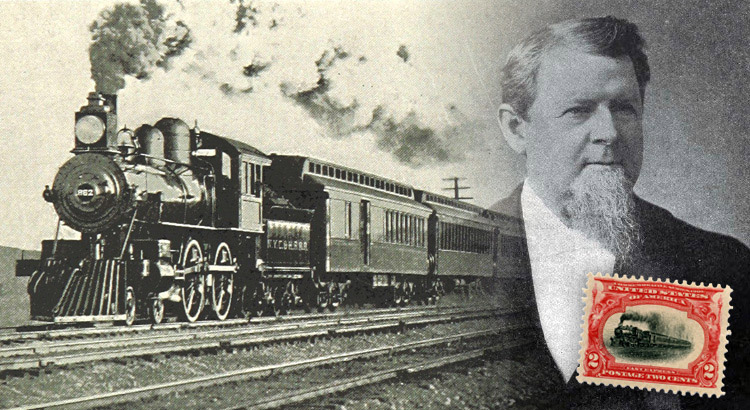
Chief Engineer Walter Katte is actually an interesting figure in New York railroad history, though not often remembered. Not only did he work on the Harlem Division, but he also oversaw work on the New York Elevated Railroad Company. Between 1877 to 1880 they built the first parts of the Third and Ninth Avenue Els. Katte was born November 4, 1830 in London. He studied at the Kings College School, before serving as a civil engineering apprentice for three years. In 1849 he migrated to the United States and began work as an engineer for various railroads, including the Central Railroad of New Jersey, and the Pennsylvania Railroad. When the Civil War broke out, Katte served as a Colonel of Engineers in the Union Army, and oversaw the construction of several bridges. After the war, he worked for the New York, Ontario, and Western Railroad, and the West Shore Railroad, before becoming the Chief Engineer for the New York Central in 1886. He served in that position until his resignation and retirement in 1898 (William Wilgus ascended to the Chief Engineer’s position in 1899). Katte died in his New York City home on March 4, 1917.


Walter Katte

Views of Kensico Cemetery Train History Photos

Friday, September 9th, 2011

Dear readers, I am certain you are all acquainted with my terrible eBay habit. Lots of the old timetables, photos, and postcards find their way onto this site at some point in time. I must admit though, I love old things. Specifically, old paper things. Maybe it is because I am a graphic designer, and I love looking at old printed art, especially on pre-1900′s timetables and books. Though it is also possible that I’m just a nutjob destined to be one day featured on the show Hoarders. Either way, today I do want to share with you all my most recent acquisition, which is a little bit different than most things I come across on eBay.

If you’ve ever taken the Harlem Line north of White Plains, and past Valhalla, you are most likely familiar with the large cemetery that dominates the view in between stations. Kensico Cemetery shares a nearly mile-long border with the railroad, and astute observers can glimpse the main cemetery office, which once served as a railroad station, on the west side of the tracks. The choice of location of the cemetery isn’t hard to figure out – it offered both a beautifully rural final resting place, and was easily accessible from the city by the railroad. In fact, on the cemetery’s Board of Directors was Chauncey Mitchell Depew, whose name might be familiar, as I posted about him in April. He got his start as the legal counsel for the New York and Harlem Railroad under Commodore Cornelius Vanderbilt, and eventually worked his way up to the presidency of the New York Central – conveniently the railroad running right alongside the cemetery. Not only did the cemetery have its own private railroad station, it also had a private railcar named Kensico which could be rented for funerals. In 1910, the rental price for a locomotive with the railcar Kensico attached was $60.00, which today seems like a paltry sum.

All of these things I’ve discovered about the Kensico Cemetery were gleaned from a little hand-bound booklet printed in 1910, titled “Views in the Kensico Cemetery.” I bought the thing just for the single photo of Kensico station, and after flipping through it, I’m glad I did. I love it for the silliest reason, too – at the time of printing, the United States used three-digit phone numbers. There are plenty of things that I don’t really think about, and anything but seven-digit phone numbers are one of them (despite the fact that I know Brazil uses eight digits for cellular numbers, and don’t even get me started about their downright bizarre method of placing long distance calls). The book is chock-full of photos of the cemetery with plenty of open land, a much different view than today’s cemetery with over 130,000 “residents.” Below you’ll find a few of my favorite parts of the booklet, including the photo of Kensico Station.

Another side of Grand Central, views during Summer Streets Train Events Photos

Thursday, September 1st, 2011

In two short years our lovely Grand Central Terminal will be celebrating her centennial. In the years that we’ve known her, she has relatively few undiscovered secrets – countless books, documentaries, and articles have told her stories to anyone curious enough. Sure, media outlets always present these as grand, never-before-heard secrets, but for the railfans, we know (and have discussed their veracity endlessly). One can be so caught up in the immense grandeur of the monument designed by Reed, Stem, Warren, Wetmore, and Wilgus (one must never forget Wilgus) that some of the most obvious details are completely overlooked. Perhaps overlooked is not the correct word – as on a normal day one cannot really get a proper look of the exterior of this grand structure. In fact, a closer look is completely blocked by the roadway that diverts traffic around the station – one of the details that won Reed and Stem the contest for design of the station in the first place. Unless you’ve taken the roadway around the station, chances are you’ve not gotten a chance to see up-close the eight-and-a-half foot tall likeness of Cornelius Vanderbilt. Nor have you gotten a good, full-frontal view of the massive sculpture on the front facade (the enormous scale of which is practically imperceptible from the ground). But there are days in which these views are open for all to explore, and to photograph. They may call them Summer Streets, but to me, they are a great time to view Grand Central.

If you are familiar with the concept of Summer Streets, the most typical image that probably comes to mind is a bicycle. For three Saturdays, usually in August, seven miles of street are temporarily closed off to cars – allowing bicyclists, skaters, and pedestrians to stroll to their heart’s content. Although the scene is dominated by the bicyclists, you will definitely see a few photographers (like me!) capturing the view sans the ubiquitous automobile. You can get up close and personal with the Commodore and a perched eagle, and roam around the exterior to see the New York Central (now the Helmsley) Building, which was once viewable behind Grand Central – until it was eclipsed by the Pan Am (now MetLife) Building in 1963.

Both the eagle and the Vanderbilt statue predate the Terminal, but have both returned to stand watch. The cast-iron eagle, with a thirteen-foot wingspan, once perched above Grand Central Depot, the predecessor to today’s Terminal. In the late 90′s the bird was discovered in Bronxville, eventually donated to the MTA, and returned to its historical home. The statue of Commodore Cornelius Vanderbilt was designed by Ernst Plassman in 1869, and was relocated to its current home in 1913, when the Terminal was completed. The 35-story building at 230 Park Avenue, originally the New York Central Building, was designed by Warren and Wetmore and completed in 1928.


Photos from Canaan Railway Days Train Photos

Thursday, July 21st, 2011

Some months ago I randomly stumbled upon the old railroad depot in Canaan. Stumbled is really the appropriate word – I wasn’t looking for, nor expecting the station. I suppose one could say the station found me. In the original post I wrote about the station, I mentioned that I knew there had been a fire there, and after seeing fire photos in the internet I had assumed the station would be demolished. How wrong I was!

Apparently I am not the only person fascinated by the old Canaan depot. That original post has been one of the most popular stories on the blog this year. Not to mention that the people I’ve met from Canaan are fiercely proud of their depot, and proud of the railroading history of their town. Perhaps this is why I find them, and this depot so endearing.

The work on the station continues, and has progressed a little bit since the last time I was here. This time I was able to actually see the inside, which I hadn’t been able to do before. And I am not going to lie, seeing a train waiting on the platform right outside makes this place look so much more alive! I was only at the depot for a short time, and didn’t get a chance to partake in all of the activities (there was a parade, and even fireworks one night!), but I did manage to get a few photos…


As a side note, I noticed that on the depot’s website there is a form for ordering an engraved brick that will be placed at the station. I’ve been toying with the idea of getting one and having them write IRideTheHarlemLine.com on it (assumedly we’re not advanced enough to be placing QR codes on bricks…) Anyone want to contribute? They cost $150.

Book available for download: The History of the New York & Harlem Railroad History

Wednesday, April 20th, 2011

When it comes to the history of the Harlem Line, you can’t beat The Coming of the New York & Harlem Railroad, by Lou Grogan. It is, by far, the most complete history of the line, and full of wonderful pictures. There was, however, another book written on the New York & Harlem, covering the line’s early history many years prior. I had been trying to get my hands on it for a while… I know of only three copies that exist: the one I didn’t win on eBay, one that belonged to Gouverneur Morris, Jr., and is now in the collection of the New York Historical Society, and one that belongs to the Katonah Village Library. The book was written by Clarence Hyatt in 1898, so it is hardly something that bookstores or even internet booksellers have. The only thing I knew about it was that it was quite small, about 36 pages. Beyond that, I knew nothing of what was inside.


Photo of Chatham from the book, taken at some point in the late 1800′s

I finally got off my butt and made the trip to the library in Katonah on one of the days we had warm weather. I’d never been to the library before, so I didn’t know what to expect, or whether the book would even be in a “public” area. The person at the front desk was rather snippy with me when I asked her to help me find the book, despite me saying I had never been there before and had no idea where to look. I told her that I figured the book would probably be in a special section, given the fact that it is over a hundred years old… and she told me to go talk to the reference librarian. Thankfully, the reference librarian was kind and helpful. The book was in a locked cabinet, and I took it to a couch, where I read it in short order.

And then, of course, I digitized it. I would have much rathered to scan it, to get a better quality, but I ended up just photographing each page. The majority of the book is text, though there are a few photographs: two of Chatham, one of Mount Kisco, and another of Chappaqua. It does have some pretty cool little anecdotes about general rail history, and the history of the Harlem.

Did you know that Peter Cooper, other than having absolutely amazing facial hair, was the designer and creator of the first steam locomotive in the US, a locomotive which could only attain a speed of eighteen miles-per-hour? I didn’t.

Amusingly, the book details people opposing railroads, and not for things that at least make sense – like the noise of the locomotives. No, people protested because they thought that railroads would effect animals: preventing cows from grazing, causing hens to stop laying eggs, and railroads would lead to the destruction of birds. But then there were also people on the opposite side of the spectrum: the citizens of “primitive” and rural areas, such as Dover Plains, that gazed at locomotives for the first time with intense curiosity.

In the continued celebration of Harlem Railroad Month, I am happy to share this wonderful book. It is a relatively short read, but an interesting one.

[pdf-ppt-viewer href="http://www.iridetheharlemline.com/ny_harlem.pdf" width="600" height="500"]

If you’d prefer to download the book (or the above preview doesn’t work), please right click on this link, and choose to save the target as.

Timetable Art of the New York Central Encounters / Observations History

Friday, March 4th, 2011

I’ve certainly mentioned it on this blog before… I’m terrible at finishing things. Oh, I am so brilliant at starting them. I always have the most wonderful ideas for things, for projects. But the majority of the time, they never make it out of my head and into reality. And the few that I do happen to act upon, well, many of them are never completed. I am very bad like this.

At least a year ago, maybe even longer, when I first became interested in railroad timetables, I made a little poster showing some of the New York Central’s system timetables over the years. I had just begun to appreciate the functional art that is a timetable, and the little portion of me that endured many art history classes began connecting the stylistic choices with the events of the time. And probably just like every paper I wrote for an art history class, it was comprised of complete and utter bullshit. It seemed to make sense at the time, at least I think it did. Maybe it makes some sense. Hell, maybe it makes complete sense, and logically explains why there were so many stylistic changes on the timetables over the years. I had every intention of posting it, after it was completed. After I, I don’t know, verified some of the grandiose claims that I made? But I never did that. And this sat. And sat. And sat some more, in the dark little recesses of my hard drive, covered in spiderwebs, with crickets chirping merely to hear their own voices, out of complete and utter loneliness.

Today, however, I am crazy enough to post this, mostly because the former project, which I had high hopes for, was calling out to me for some reason. It wants the chance to see the light of day. I doubt I’ll ever do anything with this beyond this post, but if there are any other art-slash-rail-history folks out there that would like to discuss this, I might enjoy that.

A visit to the Gare du Palais, Quebec Train History Photos

Friday, February 11th, 2011

If you’ve ever seen a driver from Quebec, you may be familiar with the motto of the province: Je me souviens – which appears on the license plate. The motto translates to “I Remember” – the underlying meaning of which is open to interpretation. Most likely it refers to the rememberance of Quebec’s unique history as a colony of New France, and its current status as the sole French-speaking Canadian province. Considering this motto, the design of Quebec city’s Gare du Palais train station (saying train station is a bit redundant, as the gare portion of the name is French for station. du Palais translates to the Palace.) is incredibly appropriate. The building is more than just a simple train station, it is a reflection of Quebec’s history, and is full of symbolism.


The Gare du Palais was completed in 1915, designed by American architect Harry Edward Prindle. Prindle was born and studied in New York, but moved to Canada in 1912 to work for the Canadian Pacific Railway, establishing himself in Montreal. The Gare du Palais was modeled stylistically after the Chateau Frontenac hotel, which was also designed by an American – Bruce Price. Frontenac itself was also built for the Canadian Pacific Railway as a destination for wealthy, luxury rail travelers. The two buildings typified the chateau style, a revival of French Renaissance architecture.


From the outside, the Gare du Palais is quite an imposing structure. The station’s high-pitched roof is made of copper, and the building is composed of granite, Deschambault limestone, and brick. The front facade features a clock eight feet in diameter, and a large metal-framed window twenty-five feet long and forty feet high. The window is divided into seven panels, each displaying the coat of arms and representing seven men important to the history of Quebec:
Charles Jacques Huault de Montmagny, 1599 – 1654. Served as a governor of New France, and negotiated a peace treaty with the Iroquois.
Marquis Alexandre de Prouville de Tracy, 1603 – 1670. Served as Lieutenant General and acting governor of France. Fought against both the Iroquois and Mohawk nations.
Louis de Buade de Frontenac, 1622 – 1698. French soldier, served as the Governor General of New France.
Jean Talon, Comte d’Orsainville, 1626 – 1694. Served as the first Intendant of New France.
Charles de la Boische, Marquis de Beauharnois, 1671 – 1749. Served as a governor and intendant of New France.
Louis-Joseph de Montcalm, 1712 – 1759. Soldier and commander of the French and Canadian forces in the French and Indian War. Killed while his troops were retreating after being defeated in the Battle of Quebec.
Major General James P. Wolfe, 1727 – 1759. Officer in the British army, defeated Montcalm’s forces in the Battle of Quebec. Although killed in this battle, he is remembered as the “Conqueror of Quebec”.


The seven coats of arms are repeated throughout the building, even as little details on the station’s chandeliers. Various other coats of arms can be found inside, including Quebec’s over the outer door, and Britain’s displayed in the form of a clock over the entranceway to the waiting area. Additional symbols can be found interspersed throughout, like the floral emblems visible on the brickwork: the Tudor rose, representing England; the thistle, representing Scotland; the shamrock, representing Ireland; the fleur de lis, representing France; and the maple leaf, of course representing Canada.


I would definitely include the Gare du Palais on my list of most beautiful train stations I’ve visited. Although significantly smaller than other stations like Grand Central or even Toronto’s Union Station, it does include various restaurants and a few little shops. The city’s bus station is also connected to the rail station, although it is a newer building not part of the original station. For a Saturday morning the station didn’t look like it got too much traffic, but of course it gets far more than the years it lay dormant between 1976 and when it was reopened in 1985.

Anyways, here are a few more photos of the station. Unfortunately there are no photos of any trains, as without a ticket they were not permitting to go into the area the trains were at.


*A historical note about this post: information regarding the history of the Gare du Palais is very lacking on the internet, at least in English. The majority of the history found in this post derives from a little piece of paper hung up by Via Rail on the wall of the station’s Panorama Room. A copy of that document can be viewed here.

Taking the Grand Tour: A Review of Grand Central’s New Audio Tour Train Encounters / Observations History Photos

Thursday, December 30th, 2010

Observant commuters may have noticed something new in Grand Central in November – a little booth by the ticket windows labeled Audio Tours. Or you might have seen it mentioned in the Mileposts, or perhaps in a poster on your train or at your station? Either way there is a new way to tour Grand Central – and I’m not talking about a giant tour group where you have to strain to hear the tour guide. Grand Central now has an official self-guided audio tour. While I was at Grand Central the other day I took the time to give the tour a shot – a review of sorts.

 
Audio tour booth, Metro North employee Patrick mans the booth during my visit

Honestly, I wasn’t expecting much. I know a lot about Grand Central, and I figured that I wouldn’t learn anything new. But I was a tad curious to know what would be included in a tour of Grand Central, and how it would be described. There are a lot of things I know about the history of the place. And I am also aware that there are folks in the hardcore railfan community that are of the opinion that there have been some… shall we say, anecdotal embellishments added into the lore of the Terminal. But there is just so much that can be said about the history of this building, what exactly do you say to fit into an hour, and what parts do you leave out?


Handheld device for the audio tour

I must admit though, I enjoyed the tour. The technology used is great. If you don’t want to borrow the device and headset for the tour you can download it to your own mp3 player – or at least you’re supposed to. I’ve been unable to purchase it on the website, not to mention it lists the prices only in Euros, which irrelevant if the company that made the tour may be foreign, it just looks poor in a US market. The actual devices that you can borrow for the tour are not only audio devices, they have a small screen in which to show a photo of where you currently are on the tour. I love the fact that it really is a self guided tour – you enter the number of the location you currently are in to hear about it. If you don’t want to hear about it, you can always skip that location. Or you can go in whichever order you please. Plus if you want to learn more about something, you can hit the green button. You can customize the whole thing and do whatever you want to.

Plenty of important places are described on the tour – from the obvious 42nd Street façade, to the clock and sky ceiling to the somewhat lesser known whispering gallery, spiral staircase in the information booth, and the walkways in between the glass panels. I loved that there were mentions of the 20th Century Limited, as well as Jackie Kennedy and the fight to save Grand Central. There were also plenty of things that I thought the tour could mention, but didn’t. Since the tour sends you outside anyways to see the façade, why not make another outdoor stop to see the majestic eagle – older than the Terminal itself – which once stood on the original Grand Central Depot? I also don’t recall hearing anything about William Wilgus. Wilgus was the railroad’s chief engineer, and the conceptual mastermind behind Grand Central. The tour briefly mentions that the Terminal ushered in the era of electric trains, but fails to mention why – and this is important! Would the railroad have undertaken such a massive project if steam locomotives were not banned on Manhattan island? Would the massively expensive project have been considered if not for Wilgus’ concept of air rights, of covering over the formerly open-cut railroad tunnels and building on it to recoup expenses and make money?

The tour does fall more on the side of artistic/architectural than railfan. But just the fact that the purpose of the building is for servicing rail, I think more of that rail history ought to be thrown in. What makes Grand Central a great railroad station, and not just a pretty building? (and I am talking more about dual levels and loop tracks, as opposed to ramps, which were mentioned)

 
Eagle originally from Grand Central Depot

For the most part the main narration of the tour was great. It was informal, like you were listening to an actual tour guide as opposed to reading one of the many books on the subject of Grand Cental. There were amusing little anecdotes thrown in, like the person asking the person at the information booth where to rent a horse. A lot of the extra details and stories on the “secrets” were recited by Dan Brucker… and I mean no insult to Dan, but there were times where it was tiresome to listen to his voice. He spoke loud and slow, perhaps as one would speak to a non-english speaker, hoping that over-enunciating words will help them understand. “This. Is. Not. A. STA-TION. It. Is. A. TER-MI-NAL. Be-cause trains. TER-MI-NATE. Here.” Now although I’ve never formally met Dan Brucker, I’ve overheard him doing tours. He is animated and it is obvious that he loves this place. But I don’t think that gets through in the tour. (Sorry Dan, please don’t be insulted, I’d still love for you to give me a tour any day!)

One option on the tour, which I believe was called Visual Experience has not been completed yet. The device mentioned that it is being worked on and will include clips from shows filmed in Grand Central. I hope they’re talking about audio clips and not video clips, because even though the device has the capacity for video the screen is so small. And if I had a hard time seeing what was in the tiny picture, then I am certain the little old ladies that took the tour right before me would have a major difficulty. Something on the other hand that might actually work would be a small companion brochure or booklet that accompanies the tour. Right now you just get a big clunky sheet of laminated paper with a map, which you can’t keep. I’m sure tourists would love something that can actually be kept. If cost is a prohibitive issue I’m sure an extra dollar or two could be charged for the nicer booklet.

Well, this certainly turned out to be the long-winded review. Basically it comes down to this:
Do I recommend the tour? Yes. The tour is ideal for people that enjoy the architecture and might not know a lot about Grand Central. If you know a lot about the place you’re probably not going to get as much out of it, but you’ll still probably enjoy it.
Did I learn anything on the tour? Yes. Somehow I had never even noticed the mural on the ceiling of the Graybar Passage.