I Ride the Harlem Line - HomePosts about the trainPosts about observationsHumorous postsPosts about advertisementsPosts about eventsPosts about eventsPosts about museumsPosts with photosPosts with videosPost ArchivesRSS FeedTwitterYouTubePanoramio

Posts Tagged ‘20th century limited’

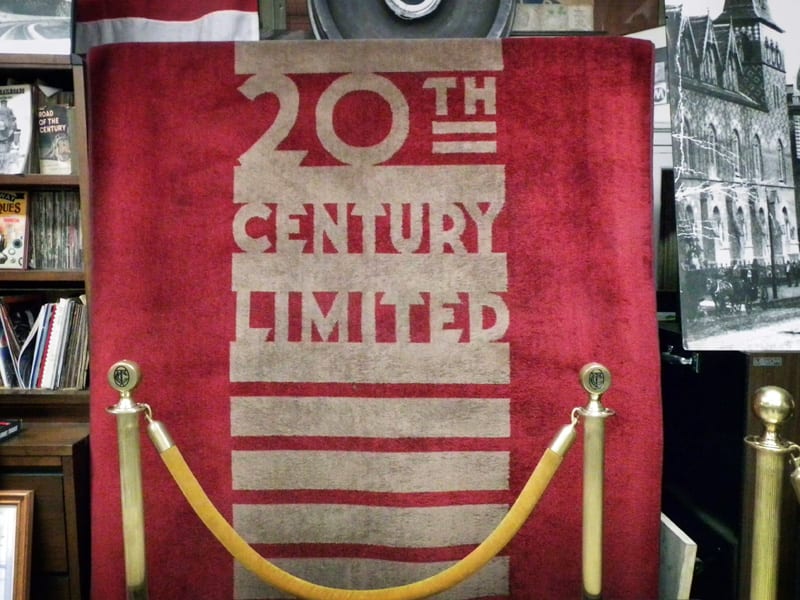
You may fly someday… a 1902 ad for the 20th Century Limited Train Advertisements History

Thursday, November 3rd, 2011

Stop me if you’ve heard me say this before… I found a really cool railroad ad that I absolutely love. Okay, okay, I’ve said that far too many times. One of my most recent acquisitions is this 1902 advertisement for the famous 20th Century Limited. This famous train has little to do with the Harlem Line – it ran along the New York Central’s “Water Level Route” – part of which is today’s Hudson Line. But on the rare occasion where there was a problem on the tracks, the train could be diverted to Chatham and instead run down the Harlem Division, into Grand Central.

Part of the reason why I love this ad is the history behind it. The advertisement was printed in the inaugural year of the 20th Century Limited. In 1902, trains really were the best way of transportation in the United States. Although cars did exist, they didn’t really become available to the masses until 1908. At the time the ad was printed, the Wright Brothers had not yet made their historic flight. The world did not see its first passenger “airline” running scheduled flights until 1919. And the first automobile road across the United States, the Lincoln Highway, was not completed until 1913 – though much of it was unpaved and of poor quality. The true modernization of our intercity roads did not come until 1956 with the Interstate Highway System, truly sparking America’s love affair with the car. The glamor of rail travel began to fade, and the automobile replaced the train as the preferred method of transportation in this country. But in this ad the train was still king – and the 20th Century Limited was the most grand of all.


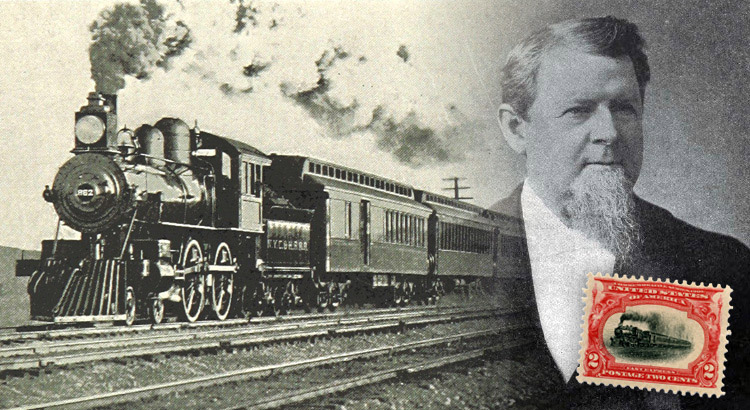
Obviously the pricetag of an early car was nothing for the Vanderbilts’ fortune. William Kissam Vanderbilt can be seen here in his racing car in 1904. [image credit]

The one thing I do find slightly amusing about this ad (I always find something slightly amusing – I’m easily amused) is how it somewhat shows the stagnation of our train technology. While other countries developed effective high speed rail systems, we’ve barely scratched the surface in terms of fast trains. As visible in the ad, the original travel time for the 20th Century Limited was 20 hours. Over the years that time was whittled down to fifteen and a half hours. Today, Amtrak’s Lake Shore Limited follows a very similar route to the 20th Century Limited, and makes the journey in 19 hours. Although the Lake Shore Limited makes more stops than the 20th Century, one would think that in over a hundred years we’d be running a whole lot faster than that.

The United States has had many “firsts” in railroad history – like the first four-track railroad in the world – but other countries have far surpassed us in railroad technology and innovation. The highest speed record for a train is 361 mph (a test train, the record for an actual passenger train is around 245 mph), but unless we build dedicated rail lines for faster trains, we’ll never see an American train going more than 150mph. Perhaps we may fly someday – on a fast train speeding across rails of glinting steel.

Taking the Grand Tour: A Review of Grand Central’s New Audio Tour Train Encounters / Observations History Photos

Thursday, December 30th, 2010

Observant commuters may have noticed something new in Grand Central in November – a little booth by the ticket windows labeled Audio Tours. Or you might have seen it mentioned in the Mileposts, or perhaps in a poster on your train or at your station? Either way there is a new way to tour Grand Central – and I’m not talking about a giant tour group where you have to strain to hear the tour guide. Grand Central now has an official self-guided audio tour. While I was at Grand Central the other day I took the time to give the tour a shot – a review of sorts.

 
Audio tour booth, Metro North employee Patrick mans the booth during my visit

Honestly, I wasn’t expecting much. I know a lot about Grand Central, and I figured that I wouldn’t learn anything new. But I was a tad curious to know what would be included in a tour of Grand Central, and how it would be described. There are a lot of things I know about the history of the place. And I am also aware that there are folks in the hardcore railfan community that are of the opinion that there have been some… shall we say, anecdotal embellishments added into the lore of the Terminal. But there is just so much that can be said about the history of this building, what exactly do you say to fit into an hour, and what parts do you leave out?


Handheld device for the audio tour

I must admit though, I enjoyed the tour. The technology used is great. If you don’t want to borrow the device and headset for the tour you can download it to your own mp3 player – or at least you’re supposed to. I’ve been unable to purchase it on the website, not to mention it lists the prices only in Euros, which irrelevant if the company that made the tour may be foreign, it just looks poor in a US market. The actual devices that you can borrow for the tour are not only audio devices, they have a small screen in which to show a photo of where you currently are on the tour. I love the fact that it really is a self guided tour – you enter the number of the location you currently are in to hear about it. If you don’t want to hear about it, you can always skip that location. Or you can go in whichever order you please. Plus if you want to learn more about something, you can hit the green button. You can customize the whole thing and do whatever you want to.

Plenty of important places are described on the tour – from the obvious 42nd Street façade, to the clock and sky ceiling to the somewhat lesser known whispering gallery, spiral staircase in the information booth, and the walkways in between the glass panels. I loved that there were mentions of the 20th Century Limited, as well as Jackie Kennedy and the fight to save Grand Central. There were also plenty of things that I thought the tour could mention, but didn’t. Since the tour sends you outside anyways to see the façade, why not make another outdoor stop to see the majestic eagle – older than the Terminal itself – which once stood on the original Grand Central Depot? I also don’t recall hearing anything about William Wilgus. Wilgus was the railroad’s chief engineer, and the conceptual mastermind behind Grand Central. The tour briefly mentions that the Terminal ushered in the era of electric trains, but fails to mention why – and this is important! Would the railroad have undertaken such a massive project if steam locomotives were not banned on Manhattan island? Would the massively expensive project have been considered if not for Wilgus’ concept of air rights, of covering over the formerly open-cut railroad tunnels and building on it to recoup expenses and make money?

The tour does fall more on the side of artistic/architectural than railfan. But just the fact that the purpose of the building is for servicing rail, I think more of that rail history ought to be thrown in. What makes Grand Central a great railroad station, and not just a pretty building? (and I am talking more about dual levels and loop tracks, as opposed to ramps, which were mentioned)

 
Eagle originally from Grand Central Depot

For the most part the main narration of the tour was great. It was informal, like you were listening to an actual tour guide as opposed to reading one of the many books on the subject of Grand Cental. There were amusing little anecdotes thrown in, like the person asking the person at the information booth where to rent a horse. A lot of the extra details and stories on the “secrets” were recited by Dan Brucker… and I mean no insult to Dan, but there were times where it was tiresome to listen to his voice. He spoke loud and slow, perhaps as one would speak to a non-english speaker, hoping that over-enunciating words will help them understand. “This. Is. Not. A. STA-TION. It. Is. A. TER-MI-NAL. Be-cause trains. TER-MI-NATE. Here.” Now although I’ve never formally met Dan Brucker, I’ve overheard him doing tours. He is animated and it is obvious that he loves this place. But I don’t think that gets through in the tour. (Sorry Dan, please don’t be insulted, I’d still love for you to give me a tour any day!)

One option on the tour, which I believe was called Visual Experience has not been completed yet. The device mentioned that it is being worked on and will include clips from shows filmed in Grand Central. I hope they’re talking about audio clips and not video clips, because even though the device has the capacity for video the screen is so small. And if I had a hard time seeing what was in the tiny picture, then I am certain the little old ladies that took the tour right before me would have a major difficulty. Something on the other hand that might actually work would be a small companion brochure or booklet that accompanies the tour. Right now you just get a big clunky sheet of laminated paper with a map, which you can’t keep. I’m sure tourists would love something that can actually be kept. If cost is a prohibitive issue I’m sure an extra dollar or two could be charged for the nicer booklet.

Well, this certainly turned out to be the long-winded review. Basically it comes down to this:
Do I recommend the tour? Yes. The tour is ideal for people that enjoy the architecture and might not know a lot about Grand Central. If you know a lot about the place you’re probably not going to get as much out of it, but you’ll still probably enjoy it.
Did I learn anything on the tour? Yes. Somehow I had never even noticed the mural on the ceiling of the Graybar Passage.

Friday’s From the Historical Archive: Wartime Magazine Advertisements Train Advertisements History

Friday, June 4th, 2010

I don’t want to be an ass in saying this comment, but really, I wonder how trains function in the United States. Commuter trains and subways, like the ones in New York, New Jersey, Pennsylvania, Chicago, and other places across the country make sense to me. They are practical, and they don’t take too long. By the time I was twenty, I had been to the city a million times, all by train. We never drove. Driving took probably around the same time as the train, and you didn’t have to worry about parking, and tolls, and traffic. Taking the train is not too expensive, as well. It just makes sense. I can count the number of times I have gone to the city by car on one hand. And the first time was when I was twenty.

But how does Amtrak work? I’ve only been on Amtrak twice, going to Florida and back with my grandmother that has a minor phobia of planes. I’ve thought of taking the Lake Shore Limited to Chicago, but that is only because I like trains, and I think it would be cool to ride what was once known as “The Water Level Route.” But other than having a phobia of planes, and being a railfan, why would I want to take Amtrak? Searching up prices, I can get a round trip flight to Orlando for July 4th for $193. That ride takes two and a half hours. Or, with Amtrak, I could ride for twenty-two hours, and pay a whopping $423. Why would anyone want to pay more than double for a trip that takes more than seven times as long? In Japan I took the bullet train to Kyoto, which in terms of time and price is very close to flying. Close enough to compete, anyways. But then that just goes back to the usual argument that the US wanted their Interstate System, while other countries, especially Japan, concentrated on rail.

That sort of demonstrates my mind-set when I think about trains. There are some times when I read about their history, that I am completely and utterly baffled by how important they once were. Rail was the way that products and people were transported. And during World War II, trains were an integral part of the war effort. The New York Central operated personnel trains, mail trains, equipment freight, and even hospital trains. An average of two million troops per month were transported over the NY Central system during WW2. I always love looking at old advertisements, so today I have a collection of old New York Central magazine advertisements from the war years. Each advertisement depicts a different scene or use for the wartime trains: from riding the 20th Century Limited, to troop trains, to the fully equipped surgery suite on an army hospital train.


It is interesting to note that part of the reason why we have the Interstate System today can be attributed to the war. President Eisenhower pushed for the Interstate System, especially after experiencing the German autobahn while he served in World War II. He had also been associated with the Transcontinental Motor Convoy which drove from Washington DC to San Francisco, and took sixty-two days. That sort of puts it in perspective, how roads in between cities were back then. Today if you drove non-stop and managed to avoid traffic, you could drive that in two days. Sixty-two days, no wonder why people took the train!

1910′s Advertisement, New York Central – The Four Great Sights of the East Uncategorized

Sunday, February 20th, 1910